
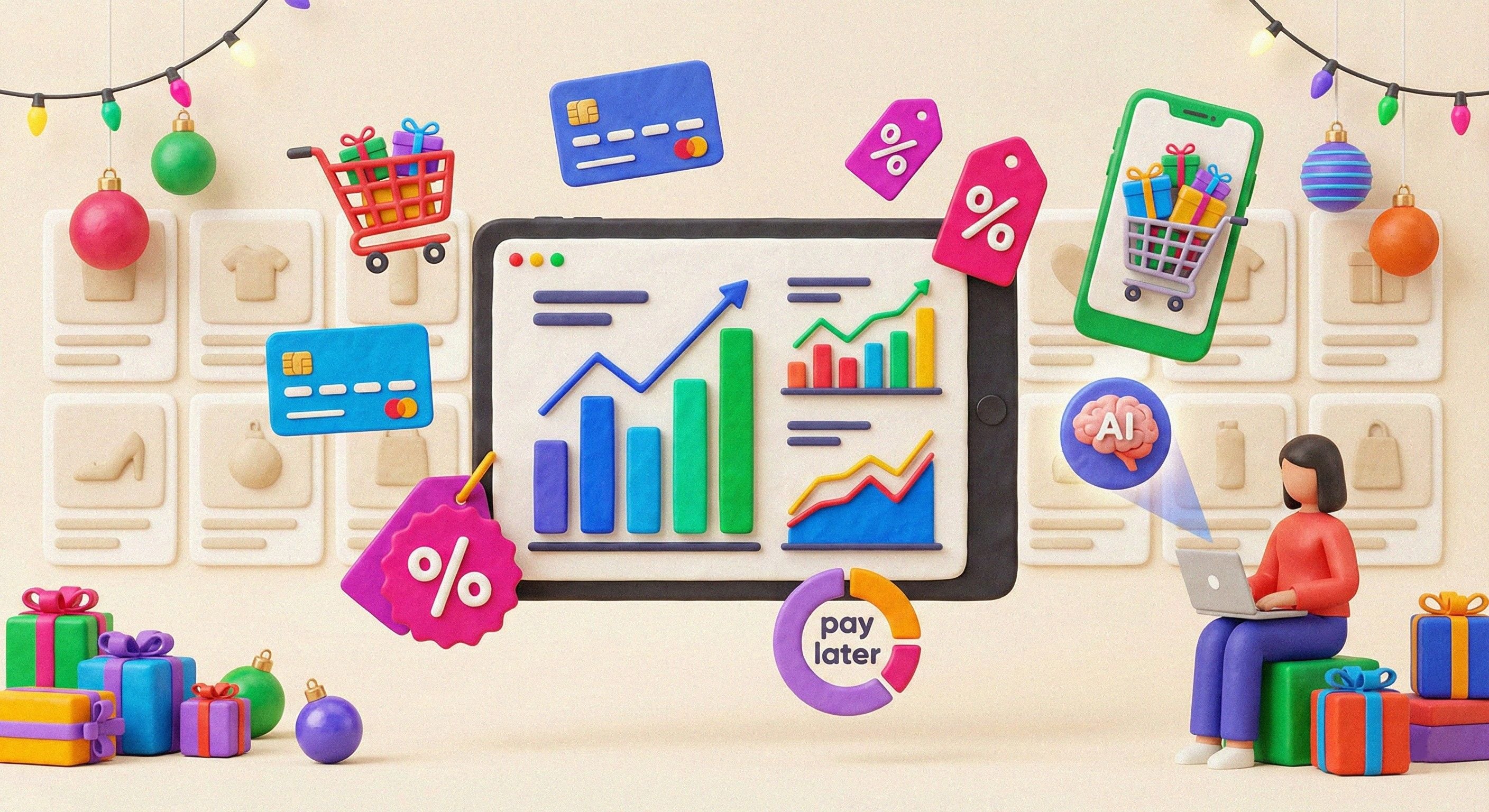
The U.S. is rich with Thanksgiving traditions: parades, football, elaborate meals, turkey trots. And, of course, there’s the shopping. Another tradition over the past decade (2014 to be exact, except for one small dip during COVID) has been for Black Friday sales to rise from one year to the next.
That was the case last Friday, when a new record was broken and consumers spent nearly $12 billion online, eclipsing $11B for the first time. Then we finished out the rest of the Cyber 5 (the stretch from Thanksgiving through Cyber Monday) with more records. The $14.25B spent online in the US on Cyber Monday set the mark for the US’ biggest online shopping day ever.
It speaks to why many are optimistic about the state and trajectory of ecommerce over the next year and beyond. But digging in deeper to the trends and stats from Cyber 5 tell an even more interesting story that ecommerce leaders should be noting.
Consumers are still spending-conscious
The revenue figures don’t mean the average consumer is just throwing their money around at every item they want. All indications continue to point to a consumer base that is more calculated and frugal than in years past.
This actually makes sense as to why Black Friday was so strong. If consumers know they are going to have to do more with the potentially limited income/expendable resources they have, then they’re going to take advantage of deals where they find them. As Joe Shasteen, RetailNext’s global manager of advanced analytics, told Forbes, "The era of the impulse holiday spree is ending. Consumers are in control, and they’re treating Black Friday as one data point in a much longer hunt for value.”
Another indication of this is the fact that buy now, pay later offerings accounted for more than 6% of all Black Friday digital sales, equating to $747.5M. Americans are still finding ways to get the products they need and want, but taking advantage of both deals and methods for making their budgets last and have the greatest impact.
This is going to be an interesting aspect to follow the rest of the holiday season. Are the companies providing the greatest discounts and multiple payment opportunities, such as buy now, pay later, going to reap the benefits?
Factoring in inflation
The numbers are positive however you look at them, but it’s still worth recognizing a key factor. Inflation and the price of goods are pushing those revenue numbers upward. Salesforce reported that order volumes were actually down 1% from last year, but the average sales price was up 7%.
Still, inflated prices and economic woes could have seen consumers push back and refuse to partake, but that wasn’t the case. A 1% decrease in order volume isn’t a giant red flag and shows that consumers are going to find ways to engage and purchase during these valuable deal-finding shopping days.
AI’s role in Black Friday shopping
Just a few weeks ago we wrote about the impact that large language models and generative AI platforms are going to have on ecommerce in the near future. This last week proved why this impact is so strong.
Adobe found that traffic to retailers from AI platforms was up 805% this year compared to 2024 and those who went the generative AI to retail page route were 38% more likely to complete a purchase. Similarly, Salesforce believes that $3B of the nearly $12B spent on Black Friday came from AI agents.
These figures, combined with the fact that mobile had a huge impact on overall sales and traffic, provide a clear picture of what the future of online shopping is looking like moving forward.
If you want to know how to take these insights and turn them into tangible strategies for your business for the start of the year and next holiday season, schedule some time to talk with us.