
National Retail Federation’s annual NRF conference that takes place each January in New York City is known as a place where industry leaders unveil the latest innovations and technology that shape the coming year.
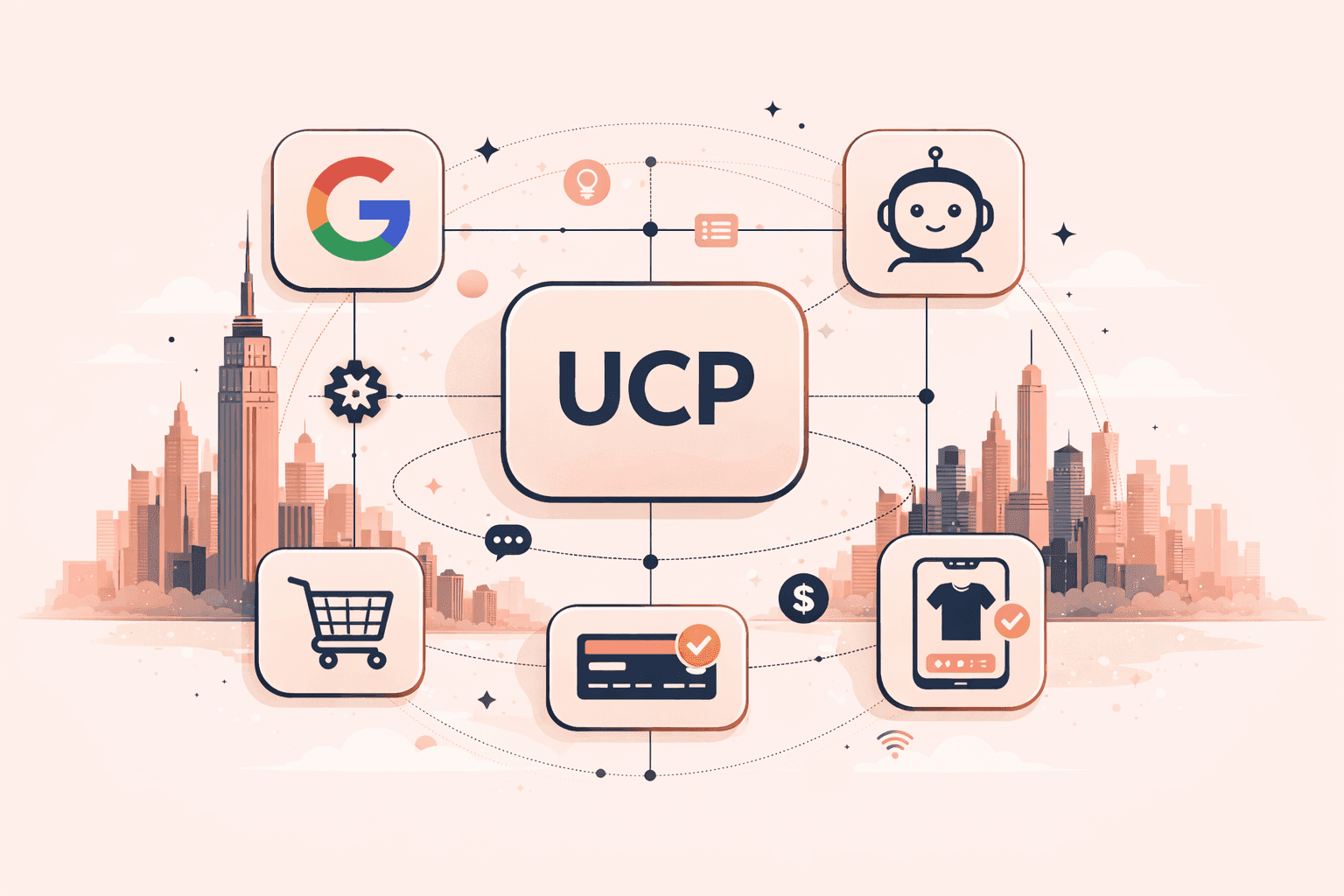
This year, the announcement that created arguably the most buzz and encapsulates what is likely the biggest trend of the year (agentic commerce) came from Google and the debut of Universal Commerce Protocol (UCP). The name may not give it away if you’re not deep in the agentic commerce space, but this is another major move toward the full customer lifecycle taking place with AI agents and merchants working side by side.
And since we’re still on the cusp of these new ventures, here’s what you need to know about Google’s announcement and agentic commerce in 2026.
Defining and Understanding UCP
Let’s start with the basics. An AI protocol is a standardized set of rules for AI agents to abide by in order to communicate, collaborate, and integrate. The purpose is so that the experience is not drastically different from one agent to the next. Several key protocols already exist that drive how agents work with one another, engage with certain systems, and connect to external tools. Google’s UCP aims to similarly create cohesive standards when it comes to agentic commerce.
Google also didn’t do this alone. UCP was co-developed with Shopify and includes not only four main retail partners – Etsy, Target, Wayfair, and Walmart – but also dozens of others ranging from Gap Inc. and Macy’s to Visa and PayPal. Others, including Salesforce, have announced support for UCP, with Salesforce providing UCP support to its Agentforce Commerce merchants. Many of the biggest players in retail and payments are involved in this, which speaks to what Google is trying to accomplish with the universal nature of UCP.
What UCP Does
UCP is what will power consumers’ ability to purchase from brands directly inside both Google Gemini and Google AI Mode. Previously, Google search or a large language model (LLM) can help with discovery, but still sends the consumer to a product page on the brand’s website to ultimately make a purchase. With UCP, consumers can check out and buy directly from Google.
The idea is that any merchant can connect with AI agents to sell their products. As Shopify details in its blog post, “Merchants declare and define what capabilities they support, including their own bespoke functionality. Agents discover these capabilities, negotiate what they can handle, and proceed to complete transactions. UCP defines the discovery and negotiation mechanisms between agent and merchant, as well as the core capabilities that make commerce programmable for agents and humans alike.”
Right now, brands can get started through the Google Merchant Center and implement the agentic checkout services needed to connect agents to their platforms. The launch (naturally) focuses on Google products. But the purpose of a protocol like this is that companies can use it no matter what LLM or agentic platform it works with.
Discovery is Key to Openness
The key word in UCP is Universal. OpenAI came out with its Agentic Commerce Protocol last year, but it is contained within OpenAI’s processes and offers no way for AI agents to discover brands and their capabilities. But UCP not only has built-in discovery to make any company identifiable to agents, but then the point is eventually consumers can buy on a range of platforms.
What Can I Do Today?
One of the most difficult details to parse with any new technology announcement is understanding what is feasible today and what is potentially possible in the future. An example of future possibilities is the also announced Gemini Enterprise for Customer Experience, which Google explains, “transforms fragmented search, commerce and service touch points into one seamless journey — whether you need a shopping assistant, a support bot, agentic search or help with merchandising.”
So you hear about UCP, learn more in this blog post, and want to dip your toes in. What does that look like?
It starts with either getting set up with Google Merchant Center or going into the platform and deciding what you want AI agents to be able to see and interact with (checkout, product inventory, loyalty details, etc.). But more importantly, you still need to make sure your owned channels are in a strong position to capitalize on this. Your data, product pages, order management, and more needs to be optimized for the way that agents find and share products.
And most importantly, don’t panic. This is not the end of traditional search or ecommerce purchasing as we know it (at least not yet). We’re still at a point where this should be an explorative, testing-filled innovation strategy in addition to what you’re already doing.
You’ll find a lot of content out there about what’s possible with agentic AI and the fast-moving nature, but less about what it looks like in the day to day and what you need to be successful. That’s where we can help. Reach out to see if your tech stack and infrastructure is ready to support UCP development.