
It’s January, which means it’s the time when everyone on the internet shares what they’re committed to doing better in the new year. It’s a bit cheesy, yes, but in the professional context, the exercise in itself can be beneficial.
There are a handful of decisions, miscues, or ignorances that brands commit every year that are hindering the potential for their ecommerce success. These aren’t all intentional faults, but in the spirit of improvement, it’s good to make a note to try and practice strategic growth in 2026 (and beyond).
We get that approaches will vary with brand and industries, but these are four resolutions brands can make across the board for a better ecommerce experience.
Resolution #1: Prioritize Inventory Visibility and Accuracy
This holiday season, I ordered a product online, received a confirmation email, and then heard nothing else from the brand for two weeks (and no tracking link). I assumed the order was lost or never processed before the product finally arrived. Don’t do this to your customers. Provide clarity and updates around the fulfillment process, and there’s not really such a thing as too much communication here. Customers don’t want to be left in the dark to be surprised when their order arrives.
Similarly, make sure your data and platforms are connected to show inventory availability by store in real time. This is especially important for brands with multiple locations, as the world may be smaller than ever but localization still matters. They don’t care if you have a product 30 miles away. They want to know if it’s down the street from them.
Even if you only have one location, don’t make it a guessing game whether an item will be on shelves or available for checkout. It’s an easy way to lose customers.
Resolution #2: Use AI for Non-Customer Interaction Functions
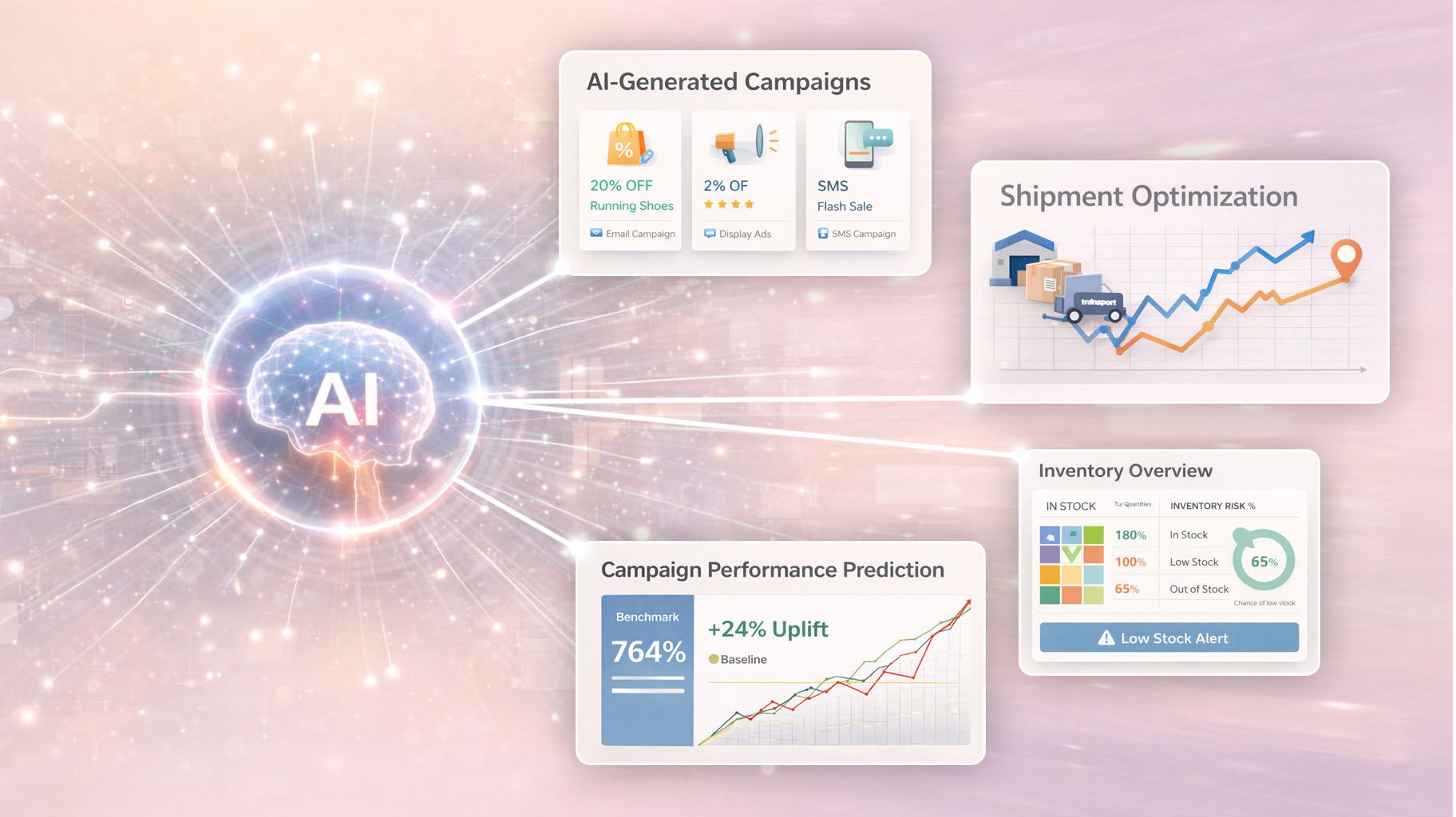
If your idea of AI for ecommerce in 2026 is a chatbot to help consumers find products, stop. There are so many other uses that have a more widespread positive impact on your business. For starters, use AI to streamline your back of house, both before and after the sale.
Before the sale, leverage AI to create marketing campaigns and promotions tailored to certain audience segments based on their behaviors and history that can be deployed across channels. And again, fulfillment is as crucial as ever, and AI can take on much of the heavy lifting when it comes to the real-time organization and visualization of your inventory and shipments.
Resolution #3: Act on Your Data
Customers are giving loads of valuable data and insights into their interests, habits, and themselves at every interaction. And you’re probably collecting it all and housing it as you should. But what are you doing with it? Are you using past purchase and behavior history to predict when that next purchase could come and how to increase cart size? Or better yet, identifying when customers are likely to churn and pushing an offer to keep them loyal?
It’s not enough to know who your customers are. You have to be able to use that information to both optimize their experience and the potential for them as a customer for your business.
Resolution #4: Optimize Your Product Detail Pages
You have roughly the amount of time it’s going to take to read this paragraph to give customers all of the information they need about your product and convince them to click “Add to cart.” With consumers spending just minutes on your product pages (if that), you can’t afford to have them spend those precious seconds frustratedly scrolling and clicking for information.
Make sure the most important information (sizes, specs, materials, etc.) is front and center. Invest in quality, hi-res photography. Leverage reviews and user-generated content so consumers can see your products in the real world. These are all relatively easy upgrades that can have a massive impact.
The good news is, you don’t have to attack these resolutions alone. Let us know how we can help prioritize your enhancements for the new year or implementing any of these strategies