
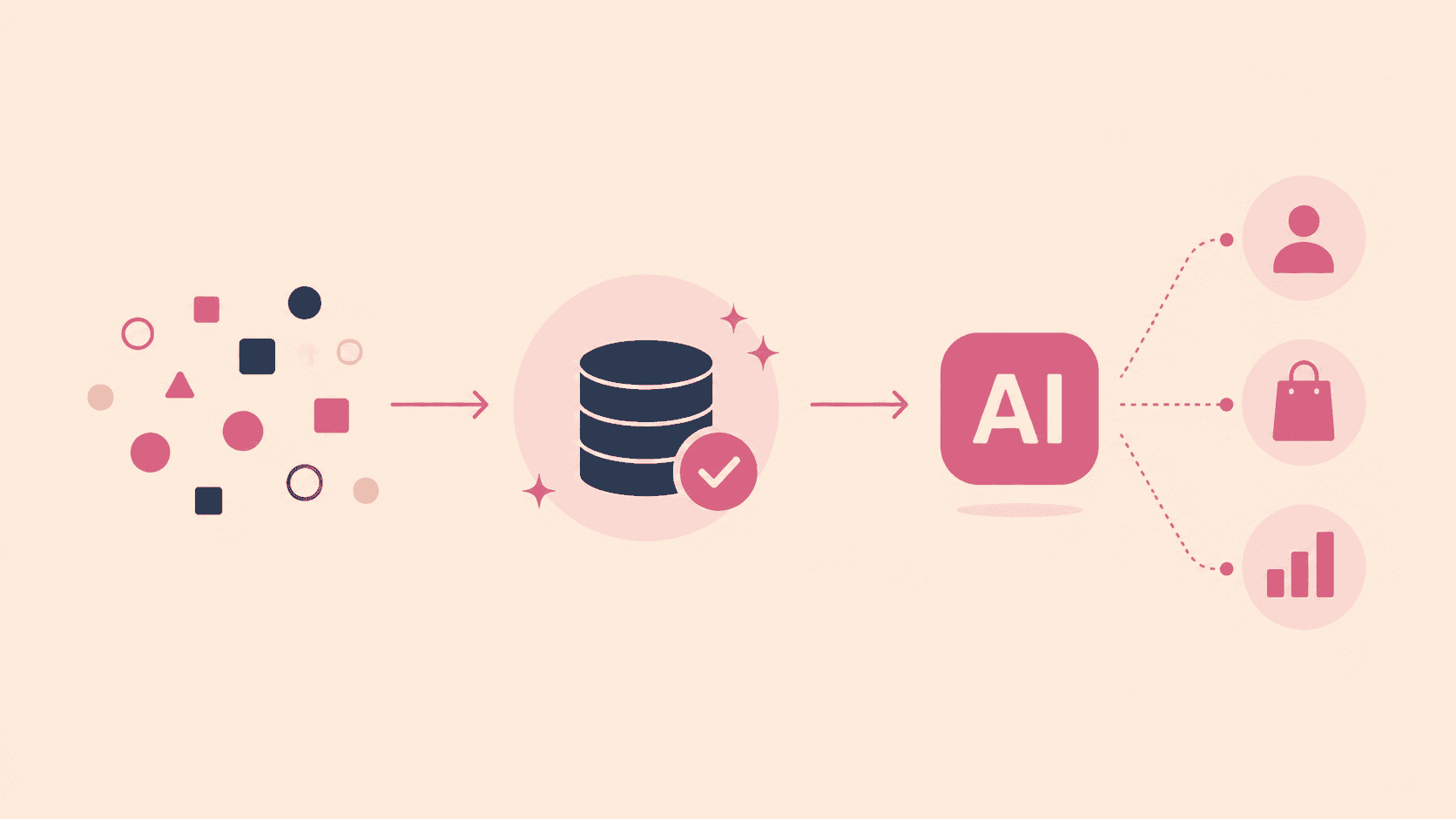
Data and AI are arguably the two biggest topics in marketing. The success of one (AI) is contingent on another (data). And what’s ironic is that the future success in AI is subject to an area in data that marketers have been struggling to find success in for years.
Brands have been trying to gather more data for decades, trading it for the promise of more personalized and relevant customer experiences. And yet, the majority of marketers still struggle with what to actually do with customer data (or how to make their own product data stand out) after all these years. This isn’t hyperbole. Our partner Klaviyo found that:
- 53% don’t have easily accessible data
- 57% don’t have their data stored in a consistent format
- 71% aren’t sure their data is clean
That’s not even taking into account the brands that may have quality data but are still unable to act on it. The Klaviyo research cites global, well-recognized brands admitting to struggling with being able to easily act on the data they have.
Expanding Channels and Tools
Now throw AI into the mix.
The fact that marketers are still struggling doesn’t bode well for the future. The channels and tools pulling data continue to expand, while the need to act on that data becomes more critical. Approximately half of data leaders believe they will need 15 or more tools to meet their needs in the coming year, according to Informatica. Centralizing and cleaning that data is more difficult than ever, and it’s leading to a large amount of technical debt.
If you have any interest in leveraging AI for ecommerce, either selling through large language models (LLMs) or leveraging agentic AIs on your site, then your data house has to be in order.
Data as an AI Differentiator
Seemingly everyone is getting into the AI game. It’s the number-one topic at every industry event and the subject of most articles. But using AI and succeeding in AI are two different conversations. And success is not a guarantee.
Gartner predicts that brands will cancel more than 40% of agentic AI projects by the end of 2027 either “due to escalating costs, unclear business value or inadequate risk controls.” Not having quality data or being able to use that data correctly is a big factor in the struggles hindering AI success.
You’ve probably heard by now some version of the phrase: bad data leads to bad AI. Intelligent AI has to learn from something. It mirrors the data it has, and if the data is bad, the AI will learn bad habits and give out bad results. But still, too many marketers are overlooking the critical foundation and trying to force new AI tools to work in unstable environments.
In addition to customer data, catalog and product data is a specific challenge for ecommerce leaders right now trying to get their products recognized by those using AI to research and discover brands.
How Good is Your Data?
It’s difficult to know where to start unless you know where you stand. That’s why we’ve created a data readiness assessment to help you pinpoint where you’re at and the biggest obstacles standing in your way.
If the score isn’t where you want it to be, don’t worry. We have a couple of options to help.
We just launched a new Readying Ecommerce Data for Agentic AI ebook that offers up six steps toward creating more AI-friendly data. Or if you’d like a more in-depth, personalized strategy, reach out to us to get started.